Sneakey Software Simply Needs a Picture to Copy Keys

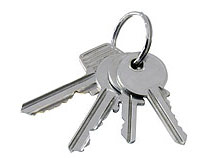
That is not a typo, the name of the software developed by UC San Diego scientists is actually called “Sneakey”. This particular piece of software is actually a form of image-recognition technology, just that instead of analyzing scanned documents like Google’s OCR, it analyzes pictures of keys in order to generate a key duplicate. The picture doesn’t even have to be a high quality one, a low resolution, long distance one will do very well.
The computer scientists from the University of California, San Diego, say that there is reason behind their madness. They came up with the key-recognition software not to break into people’s homes (although the potential for that is great), they just wanted to show the world that nothing is as safe as you might think it is, not even your house keys.
According to Stefan Savage, computer science professor at Jacobs School of Engineering, the house keys used to be safe, with the emphasis on the words “used to be”. Digital imaging and optics have come such a long way now that it is possible to copy someone’s house keys from such a long distance that they will remain blissfully unaware of it. In the demo provided by Sneakey’s developers, the software was able to create exact duplicates from a low resolution image taken with a mobile phone, and from a picture taken with a 5in telephoto lens from a distance of 60 meters (that’s the length of about 12 to 13 average cars).
If you somehow manage to get a high resolution picture of a key, then a good locksmith will be able to create a working duplicate of it, says Stefan Savage. The only upside for the security oriented house owner is that Sneakey works only on Yale-type keys; it might work on other key types, but the result might not be a working duplicate.
The computer scientists from the University of California, San Diego, say that there is reason behind their madness. They came up with the key-recognition software not to break into people’s homes (although the potential for that is great), they just wanted to show the world that nothing is as safe as you might think it is, not even your house keys.
According to Stefan Savage, computer science professor at Jacobs School of Engineering, the house keys used to be safe, with the emphasis on the words “used to be”. Digital imaging and optics have come such a long way now that it is possible to copy someone’s house keys from such a long distance that they will remain blissfully unaware of it. In the demo provided by Sneakey’s developers, the software was able to create exact duplicates from a low resolution image taken with a mobile phone, and from a picture taken with a 5in telephoto lens from a distance of 60 meters (that’s the length of about 12 to 13 average cars).
If you somehow manage to get a high resolution picture of a key, then a good locksmith will be able to create a working duplicate of it, says Stefan Savage. The only upside for the security oriented house owner is that Sneakey works only on Yale-type keys; it might work on other key types, but the result might not be a working duplicate.