Google Again Explains What a Browser Is, This Time in More Languages

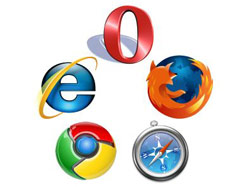
Believe it or not, there are people out there who do not know what a browser is. They use one to surf the web, read emails, and watch online videos for example, but they have no clue what the browser actually is. Mountain View-based search engine giant proved this in the summer of 2009, when it went to Times Square and asked all sorts of people the question “What is a browser?”.
Google found out that people could not tell the difference between a browser (the piece of software you use to surf the web) and a search engine (the online service used to find this and that). So Google decided to educate people. With that goal in mind, Google did three things:
1. It rolled out the WhatBrowser.org site that tells users what browser they’re using.
2. It rolled out a short video entitled What is a browser? that, as the name so adequately points out, explains what a browser is (the video is also available on the WhatBrowser.org site).
3. It rolled out an ebook entitled '20 Things I Learned about Browsers and the Web'. This is an interesting and good looking ebook that can be viewed in any browser that supports HTML5. The ebook answers to questions like how do browsers work, what is HTML5, what is cloud computing, what are cookies, or how do we stay safe online.
According to Google the '20 Things I Learned about Browsers and the Web', which was released back in November 2010, was a big success with teachers, web developers, and users who “shared in the joy of rediscovering how the web works.” Encouraged by the ebook’s success, Google decided to make it available in more languages.
The '20 Things I Learned about Browsers and the Web' is now available in 15 languages, not just English. These include Czech, Dutch, French, German, Italian, Japanese, Polish, Russian, Chinese (Simplified and Traditional), Spanish, and Tagalog. Google announced that the ebook is available in 15 languages this Thursday, the 2nd of June, 2011. Google also announced at the time that the HTML5, JavaScript and CSS used to build the ebook has been open sourced.
Google found out that people could not tell the difference between a browser (the piece of software you use to surf the web) and a search engine (the online service used to find this and that). So Google decided to educate people. With that goal in mind, Google did three things:
1. It rolled out the WhatBrowser.org site that tells users what browser they’re using.
2. It rolled out a short video entitled What is a browser? that, as the name so adequately points out, explains what a browser is (the video is also available on the WhatBrowser.org site).
3. It rolled out an ebook entitled '20 Things I Learned about Browsers and the Web'. This is an interesting and good looking ebook that can be viewed in any browser that supports HTML5. The ebook answers to questions like how do browsers work, what is HTML5, what is cloud computing, what are cookies, or how do we stay safe online.
According to Google the '20 Things I Learned about Browsers and the Web', which was released back in November 2010, was a big success with teachers, web developers, and users who “shared in the joy of rediscovering how the web works.” Encouraged by the ebook’s success, Google decided to make it available in more languages.
The '20 Things I Learned about Browsers and the Web' is now available in 15 languages, not just English. These include Czech, Dutch, French, German, Italian, Japanese, Polish, Russian, Chinese (Simplified and Traditional), Spanish, and Tagalog. Google announced that the ebook is available in 15 languages this Thursday, the 2nd of June, 2011. Google also announced at the time that the HTML5, JavaScript and CSS used to build the ebook has been open sourced.